Lesson 2, Exploring the text pt. 2

Antigone and Creon


In the lesson today we focused on exploring the relationship between Antigone and Creon. In the same way that we explored the relationship between Antigone and Ismene, we started off in pairs (my partner was Ella) and we then shared our work to the class. Watching different partners explore the relationship between Antigone and Creon was interesting as I noticed in various scenes that anyone that was playing Creon would start off with an aggressive and brazen assurance which would then spark the character Antigone to grow increasingly more angry towards the situation. Both characters within the scene are very stubborn and both hold beliefs that they won't go against. Whilst Creon tried to persuade Antigone to drop her idea of burying her brother and to respect the city's laws, Antigone does not try to persuade Creon to spare her life. She is aware of her consequences due to her actions and does not want to be demeaned by Creon. Regularly, Creon  addresses Antigone's gender and blames her behavior just because she is a woman; he does so to reinforce status between the two that Antigone actively refuses to acknowledge. 
The scene linked to the historical context we had discussed in the lesson as the scene reflects how women were treated within Greek theatre and the importance of the consequences of our actions. Antigone is aware of her consequences but remains stubborn, in despite of Creon. 


"I don't care. There's no greater glory than this for me....everyone here would cheer me, if fear didn't silence them." I feel that she's trying to assure herself of this, because she is afraid that Creon will make her see the error of her ways, and then all this rage and pain will be for nothing. 

Lesson 2, Exploring The Text

Ismene And Antigone


In the lesson we explored the scene between Antigone and Ismene. When exploring the scene out main focus was recognizing the relationship between Antigone and her sister Ismene. We explored the characters practically by getting into pairs and reading the script together. Often me and my partner (Alex) would switch roles to see which we worked best with individually. I ended up playing the part of Ismene. We then shared these to the class, which was interesting to see how different pairs had interpreted the relationship between the two sisters. Alex and I discussed the difference in status between Antigone and Ismene, which also helped us break down how we were going to play our scene. We agreed that Antigone was a brave, strong character that wouldn't allow her sister to disprove her morals. Whilst Ismene was generally less determined and passionate about her beliefs for the gods, she wasn't afraid to let Antigone know how she felt about her plan to go against the law. I think that Ismene cares deeply about her sister and wants to protect her, we can tell this by the phrases "Dear sister" and "My poor sweet Antigone" however I think that Antigone interprets Ismene's kindness as a weakness. In total, I believe that the relationship between the sisters is a situation where Ismene depends on Antigone more than Antigone depends on her sister Ismene. 

This scene links to the historical context that was shared throughout the lesson as  we learnt that play writers would create characters that would try and be morally just (to do the right thing) but would be faced with challenges and make mistakes. This is like our protagonist Antigone- she dismisses her sisters care as disloyalty whilst trying to earn respect from the Gods. 

Lesson 2, Women In Greek Theatre

"In Greek Theatre, women were sometimes seen... but definitely not heard" 


After watching the video on Women In Greek Theatre by the National Theatre, here are my notes and idea's about the topic. The video was highly informative and gave me a greater insight into how exactly Women were restricted within the society of the era. A few Greek Theatre plays touch up on issues like these, for example Antigone and Medea.

Women were not allowed to watch or perform in Greek Theatre plays, but Sophocles created strong female characters, although the plays were being performed to a society and a social hierarchy that treated women as an underclass. Plays such as Antigone, Electra and Medea show women with huge personalities, great strength and great intelligence that would fight back against the patriarchy. It is extraordinary how many of powerful women there are within the Theatre of Ancient Greece despite the highly common misogynistic beliefs that took place within Ancient Greece. Even though women did not necessarily have a political voice and were not often allowed out of the house, they would have been recognized as key roles for the city. They created children and were relied on for organizing the cities religious festivals. 

Within Greek Tragedy's, we see the tension between recognizing Women are important, and needing to control and subdue women. The play Women of Troy features strong intelligent women which deals with the issues of how women were treated in war and how women deal with the loss of their children and husbands. It is possible to argue that when the play was first performed, being a women wasn't the issue- it was more about people who were on the margins of society and people who didn't have a voice in the Government. For the Athenians, unless you were a white male over the age of 30 with a fair amount of money, you had no say in how things were run within the city. So, some could argue that the women in that play were just a representative for those who don't have a voice. Therefore, I believe that women within Greek theatre were constructed in a way that showed if women were to overcome the typical gender role then she could be aware of her capabilities and intelligence, dis-enabling a man's hold over a woman.


Lesson 2, Social Context of Antigone

What do we mean by the social context?

Social context is mainly about how the play relates to the world around it, for example what was happening politically at the time of the play, how society worked etc.I t relates to the world it was conceived in, and how it relates to an audience now. 

How did people live at the time Antigone was created?

War was common in Ancient Greece, especially between states, however many people had started to appreciate the arts, for example theatre and music. Also, a democracy within Greece had been introduced at the time that Antigone was created.

Who was the target audience for the piece?

Although men were the only ones allowed to watch Theatre, the fact that the protagonist was a Woman would not have appealed to men. In ancient Greece women were given very few rights, and were expected to stay at home and bear children, therefor having a woman as the strong leading role would be unheard of in Ancient Greece. In despite of this, the play would still appeal to the target audience as Sophocles touches on the themes of war within states, and most of the audience could relate to this as they were most probably soldiers.

What were the needs, values and beliefs of the target audience?

A typical job for a man in Greece at the time would be either a farmer, politician or a soldier. At least 25% of the population were slaves, and did most of the manual labour that added to the growing economy.

How did this influence the themes and characters of Antigone?

I think that Sophocles intended to defy the stereotypes of Women by creating the character such as Antigone- a strong woman who has her own morals that could not be changed by a man. Women in Ancient Greek would not posses this kind of ideology, so it would be a shock to the all- male audience.

What have you found out about the social context of Antigone? Think about what was going on at the time that Sophocles wrote the play. 

Greek Gods were highly important in Greek society, and many people were devout to their religion. Sometimes, religion would intervene with philosophy and law, just like  in Antigone. Socrates- a great philosopher, was killed because of his religious beliefs as they did not comply with society's rules which is similar to the situation between Antigone and Creon. 

Who went to the theatre?
Armies visited the theatre, and would sit together.Priests sat at the front of the auditorium (closest to the stage) along with the societal leaders, whilst the general public would sit in the seats furthest away from the pit, which was the equivalent of a stage.

What was the relationship between theatre, politics and religion? 

Greek Theatre would often be about the Gods as they were important to Greek society. Tragedy plays were often aimed to force the audience to make a choice- what would they do if they were in the characters position? Antigone, for example, questions weather to abide by religion and the gods, or to accept the law of the city and abide by this, no matter if it is against religion. Theatre was also a place to discuss society, which would be interesting due to the contrast in audience members (priests and politicians). If the audience were against the themes of the play, it would be labelled as inappropriate.

Lesson 2, Current Events


What was happening when Antigone was created?

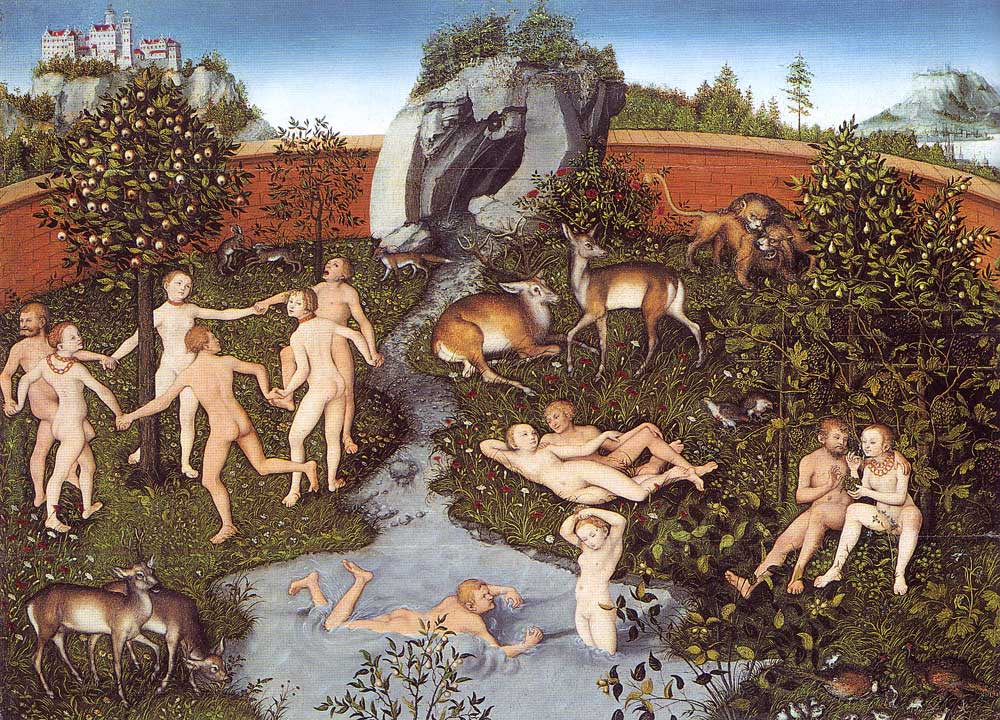
Antigone was written in 441 BC.This was known as "The Golden Age".  The Golden Age of Pericles after the end of the Persian wars. The Golden Age is the term used to denote the historical period in Ancient Greece lasting roughly from the end of the Persian Wars in 448 BC to either the death of Pericles 429 BC or the end of the Peloponnesian War in 404 BC. 


Was its creation influenced by any specific historical events?

441 BC Antigone was written and Sophocles was made a general that would lead the attack on Samos, who had been revolting against Athens since 440 BC. The cities and the allies of the opponents sparked a feud that led to the Peloponnesian War, which could have reflected the war that Sophocles writes about in Thebes, which is responsible for the death of Antigone's brothers. Also, philosophy was becoming popular, and the new views clashed with religious beliefs, which can also be found in the play, in which Antigone's religious beliefs for the Gods cause her to go against the King.


 The "Golden Age" ^

Lesson 1, Antigone


Antigone


“All men make mistakes, but a good man yields when he knows his course is wrong, and repairs the evil. The only crime is pride.” -Sophocles, Antigone


Here is a clear picture of Antigone's  Family tree:


I have read the synopsis of the play "Antigone" by Sophocles. 

Now answer these questions:

What do you think of this story?

I think that Antigone is a fantastic story. The story serves to highlight both political and moral difficulties, for example Creon- he is seen to be the villain of the play, but really he is struggling between his own morality and what is best for him as the new Ruler of Thebes. I love that the protagonist is a woman- a woman who is seen to be strong and, unlike Creon, chooses her morals over what the rules clearly state. Initially, i think that Antigone is a brave, selfless character that would offer her own life just for the sake of doing whats right for her brothers. Unlike Ismene, she does not believe that being a Woman means that she is weak and powerless. In total, i think the story is brilliant and I am excited to see what we do with it as a strand.

Why do you think Sophocles wrote this play?

I think Sophocles wrote this play for various reasons. One of the reasons is that firstly, having a women as a protagonist in Greek Theater was highly uncommon. We know this, because women were not allowed to even perform or watch! Perhaps Sophocles decided to challenge this by having Antigone as a strong protagonist. I also think that he uses the main characters for symbolism; Antigone and Creon represent a number of opposing forces: male vs. female, family ties vs. civic duty, man vs. nature, and man's laws vs. the laws of the gods.

Why do you think the Greek audiences might have wanted to see this play?

Greek audiences would have wanted to see the play as many Greek Tragedy's were about giving the audience a tough choice- what would the audience do if they were in this position? So, for Antigone, the audience would be presented with the choice- would you choose family or law? Greek Tragedy's were (and still are) riveting and gripping for the audiences, so I think that a story as strong as Antigone would be a fantastic watch for Greek audiences, as they may also be able to relate to some of the main themes within the play.


I have read the first scene from Antigone between Ismene and Antigone. 


1.What information does Antigone give to Ismene at the beginning of this scene?

At the beginning of the scene Antigone informs Ismene that she plans to bury their brother, in despite of the law and Creon.

2.What has just happened in the sisters’ family?


After the battle of Thebes, their brother's Polynices and Eteocles have been killed; fighting against each other. Eteocles died defending the city, however Polynices was an invader, so Creon had ordered him to be left to rot. 

3.What does Antigone plan to do? Why?

Antigone plans to bury their brother-a
s a sister, Antigone feels she must offer Polynices burial. She believes that leaving the dead un-buried, for any reason, offends the Gods. 


4.Does Ismene plan to join her? Why or why not?

Ismene does not plan to join her with the burial of their brother, as she wants to abide by the law of Creon. She also believes that as a woman, she is powerless. 

5.What story does the chorus tell us about?


They tell the story of the battle. The Argive army attacked all 7 gates of Thebes at once in the middle of the night. Zeus didn't like their boastfulness, so he struck down the first attacker with lightning. The Theban army then defeated them. 

Lesson 1, Multimedia In Projects

Multimedia


1. What do we mean by the phrase 'multimedia in performance'?

A name given loosely to performance in which different forms, such as speech, song, dance, film or video, are mixed together. Arising in the 1960's out of experiments like happenings and influenced by pop culture, it aspires to a kind of total theatre and often overlaps with terms such as music theatre, performance art and other types of experimental theatre. 

2. Give some examples of different types of media that could be used in a performance. Give examples of how they could be used and the positive and negative of them. 


TYPE OF MEDIA
EXAMPLE OF USE IN PERFORMANCE
POSITIVES OF USING IT…
NEGATIVES OF USING IT…

Video Camera


Music

Music could be used when complicated transitions are happening on stage. It could also be used in a piece of silent/abstract theatre.
Using it when transitions are occurring means that the audience will not lose focus; if the music fits the piece then they will feel more intrigued with what is about to happen. If it is used behind a piece of silent theatre then it can create a fitting atmosphere to the piece- it also allows the audience to interpret the piece with their own freedom. 
If  music is used in a non-silent piece of theatre it could be a possible distraction from what is happening onstage. Furthermore, it could also effect the projection of the actors as they may not be able to be heard if the music is too empowering.

Photography


Still images could be projected onto walls behind the performance space.
A positive of doing this is the photographs used could add to the main themes of the play- for example if it were a play about a murder mystery and there was a photo of the murder victim as a backdrop it would be a visual reminder the audience of the main theme and mystery that is ever so constant throughout the play.
This could possibly crowd the stage and make it seem as if too much were going on within the scene rather than having just a plain backdrop which would allow the actors to portray the main themes of the play themselves with their theatre skills rather than having a physical representation do it for them.

Sound Effects

Sound effects could be used to create atmosphere and build tension.
This could be used to make the piece of theatre more realistic- for example if a police siren sound was used it would be more effective than if an actor tried to make the noise themselves.
A negative of doing this could possibly be that it may break the focus and intense aura that has been constructed onstage and just be ineffective. 

Torch lights

Torch lights could be used to be a literal pass of focus onstage.
An advantage of this is that the audience are fully aware of who is holding the focus at different parts throughout the play, for example if many actors are within the space at one time and someone is trying to deliver a line it could be difficult to figure out who is talking and if they are the supposed to be main focus; however the use of torchlight's could allow this to become very clear.
A disadvantage of this is it could become too distracting from the piece and the actors- it could also not fit within the themes of the play. If a lighthearted comedy play suddenly turned the lights down and used torches to illuminate the actors faces in a mysterious- like manner it would be ill fitted and would confuse the audience.

Mobile Phones

Phones could be used in modern or futuristic plays.
Using phones in modern or futuristic plays could be a literal way to show how technology has evolved and how it effects our lives.
If phones are used in plays that are not of the time period or era when phones were originally used, it makes the play unrealistic and the audience will not be able to connect.


3. Try to think of show you have seen at the theatre that has used multimedia. What type of multimedia was used? Did it enhance the performance? How and why?

Last year I went to see a play that was based around The Cold War. Throughout the play it used sound effects, lighting, music and videos projected onto the background to add some more historical context to the play. It enhanced the performance as it allowed the audience to understand the main themes of the play (e.g war) in a more realistic, modern sense. The ending scene was incredible as the stage was filled with bright red lights, and all you could see was a silhouette of the main character. The red lights were used to symbolize an important part of the Cold War, which was extremely clever and effective. The music used was also appropriate, which is something to be aware of when working with multimedia in performance. In total, the piece was incredible and the multimedia enhanced this.


Examples of Multimedia in Performance: